You employ the team
- Deadlines move for reasons that sound plausible.
- One developer holds what nobody else knows.
- Are they using AI safely, and getting the most from it?
You pay for software you cannot read. We read it for you, in plain language, and we report to you, not to your developers.

Whether you employ the team or an agency builds for you, the picture reaches you through the people you would need to check. That is the gap.

Your team is not hiding things from you. They are describing them in a language you do not speak, and nobody in the room is paid to translate.
A named reviewer reads your estate at the pace your situation needs, and signs what they send you. They do not change mid-engagement, and no junior does the reading. We take no fee from anyone but you.
Six questions you cannot answer on your own.
A short note you can read before a meeting, with the honest reason for any gap.
Effort by business initiative, not by ticket, so spend and value stay on the same page.
Checked line by line against the spec, so you know before you sign whether you are paying for the work or for the margin.
Whether your code and data are leaving the building, and whether the team is getting the speed it should.
The risks to your business with a figure attached, and the questions to ask your team.
Code, accounts, domains and credentials in your name, checked before you need them to be.
What we look at depends on what is worrying you. There is no fixed checklist and no fixed calendar, and a quiet period is reported as a quiet period.
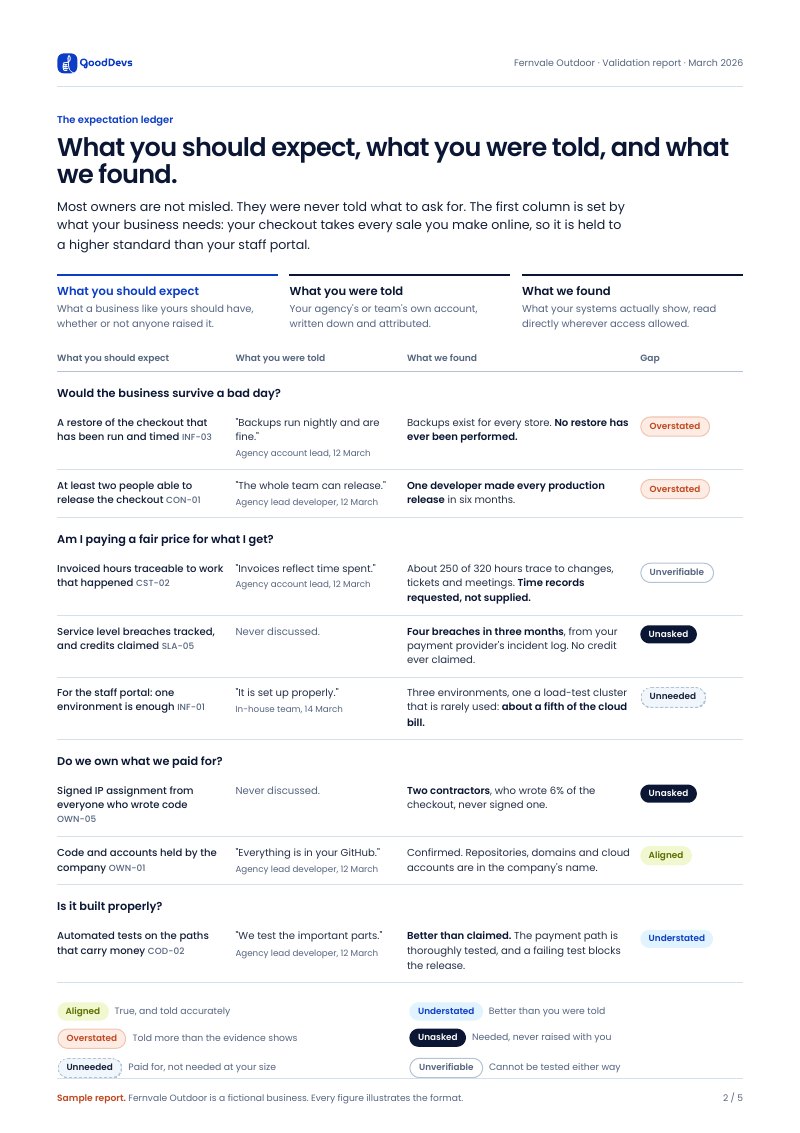
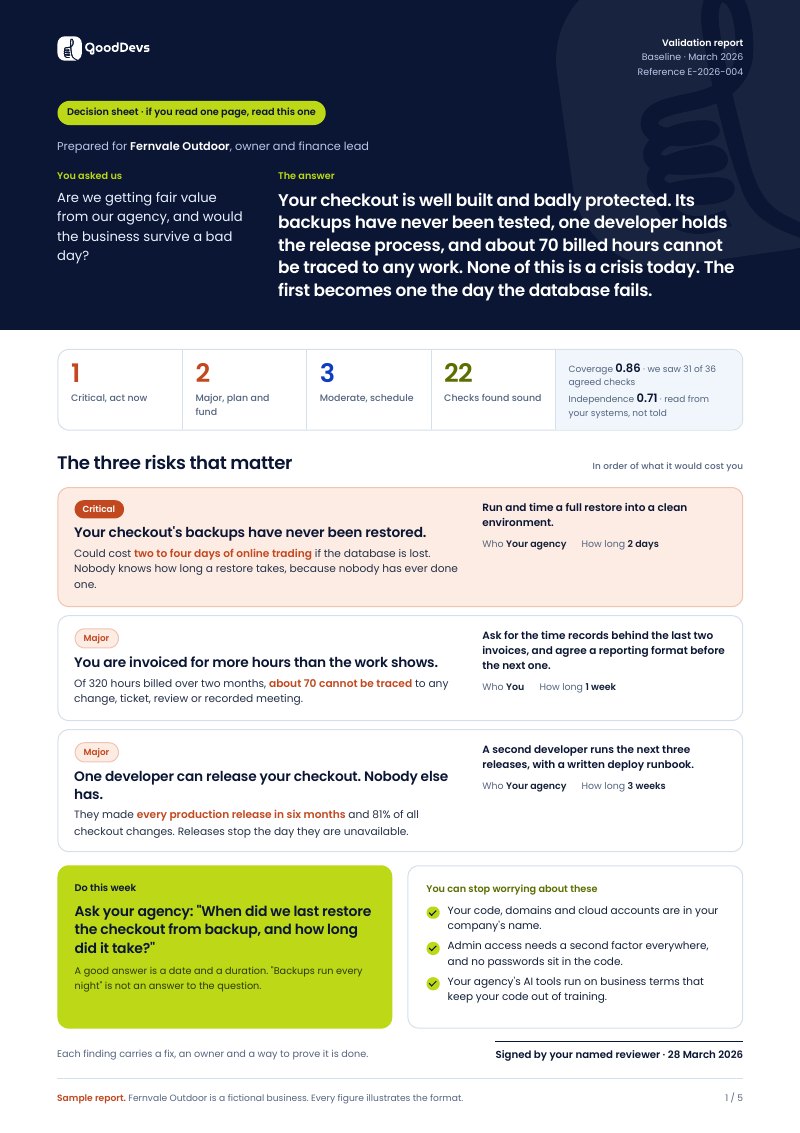
Most people read one page, so page one carries everything that matters: the risks, what each could cost, who fixes it, and what you can stop worrying about. The rest is the evidence behind it.
PDF, five pages. A fictional business; every figure illustrates the format.
Thirty minutes, no preparation, no charge. We work out what you actually need, scoped and priced fairly against your development budget. Sometimes the answer is nothing, and we say so.